The Role of Data Analytics in Personalizing Reward Offers Within Virtual Entertainment Platforms
Uma Flores · Aug 21, 2026
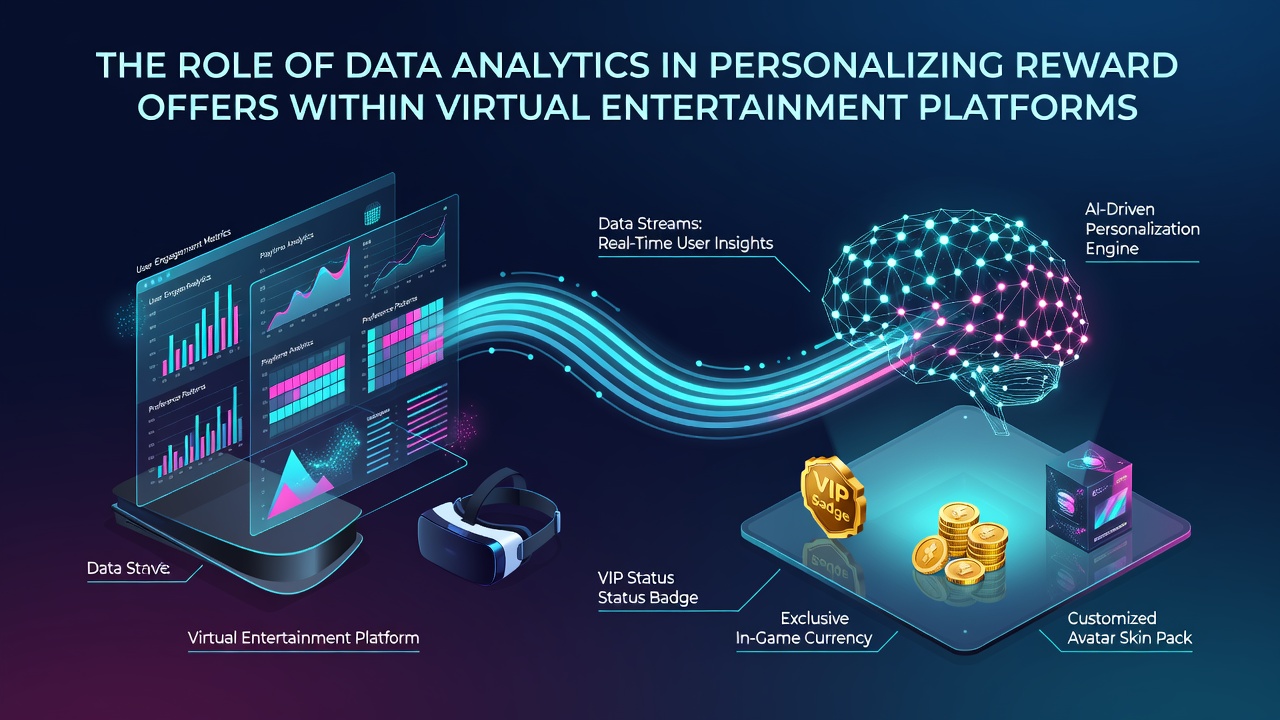
The Role of Data Analytics in Personalizing Reward Offers Within Virtual Entertainment Platforms
Virtual entertainment platforms rely on data analytics to tailor reward offers that match individual user patterns, and this approach draws from extensive tracking of gameplay duration, spending frequency, and interaction preferences across mobile and desktop environments. Analysts gather structured datasets from user accounts, session logs, and in-app behaviors, then apply algorithms that segment audiences into categories such as high-frequency players or occasional participants. These segments allow platforms to generate targeted incentives like bonus credits or exclusive content unlocks that align with observed habits rather than generic promotions.
Data Collection and Processing Methods
Platforms collect information through integrated tracking tools that record timestamps, device types, and navigation paths while users navigate virtual environments, and they store this material in secure databases that comply with regional privacy standards established by bodies such as the Australian Communications and Media Authority. Processing occurs via machine learning models that identify correlations between past reward redemptions and continued engagement levels, enabling systems to predict which offer types might sustain activity for specific demographic groups. Researchers at institutions including the University of Melbourne have documented how these models refine accuracy over successive updates by incorporating feedback loops from redemption rates and session extensions.
Techniques for Reward Personalization
Algorithms evaluate variables including average bet sizes, preferred game categories, and peak activity hours to construct individualized reward structures, and they adjust parameters dynamically as new data arrives during live sessions. For instance, a user who frequently engages with simulation-style experiences might receive offers tied to milestone achievements in those genres, whereas another pattern centered on competitive modes could trigger leaderboard-based bonuses. This differentiation relies on clustering methods that group similar profiles without manual intervention, and it produces measurable shifts in retention metrics according to industry reports from organizations like the Entertainment Software Association in the United States.
Implementation Across Platform Types
Developers integrate analytics pipelines into both browser-based portals and dedicated applications, where real-time processing engines evaluate incoming streams against historical benchmarks to trigger instant reward notifications. In August 2026 several major providers began rolling out enhanced versions of these systems that incorporate predictive elements drawn from multi-week trend analysis, resulting in offers delivered at moments when user disengagement signals first appear. Such timing adjustments connect directly to observed drops in daily active minutes, allowing interventions before full departure occurs. Observers note that cross-platform synchronization ensures consistency whether users switch between console, tablet, or smartphone access points throughout the day.

Regulatory and Privacy Considerations
Compliance frameworks in the European Union require explicit consent mechanisms before detailed behavioral profiles inform reward calculations, and platforms must provide users with options to review or limit data usage under directives enforced by national data protection authorities. Canadian regulatory reviews have similarly examined how aggregated analytics datasets avoid individual re-identification while still supporting personalization at scale. These rules influence the granularity of variables available to algorithms, prompting developers to rely more heavily on anonymized cohort analysis when constructing offer variants. Evidence from compliance audits shows that transparent disclosure of data practices correlates with higher voluntary participation rates in reward programs across multiple jurisdictions.
Measurement of Effectiveness
Key performance indicators tracked by platform operators include redemption conversion percentages, incremental session length, and repeat visit intervals, all of which feed back into model retraining cycles on a weekly basis. Studies released through the Interactive Games and Entertainment Association in Australia indicate that platforms employing advanced segmentation achieve lift in these indicators compared with uniform distribution methods, although results vary according to user base diversity and content library breadth. Continuous A/B testing protocols isolate the impact of specific analytical adjustments, providing quantitative evidence that guides iterative refinements without reliance on anecdotal feedback.
Conclusion
Data analytics serves as the foundation for reward personalization within virtual entertainment platforms by transforming raw behavioral signals into actionable offer designs that respond to documented user patterns. The integration of processing techniques, regulatory adherence, and performance measurement creates a closed system that evolves alongside platform growth and shifting audience compositions. As implementations advance through 2026 and beyond, the emphasis remains on accurate segmentation supported by verifiable datasets from multiple geographic sources.